Summary of Boundaries by Henry Cloud
Life without boundaries is difficult if not impossible. Henry Cloud explains in his book how to deal with boundaries and the importance of them in our day to day lives.
David Parham
5/20/20266 min read
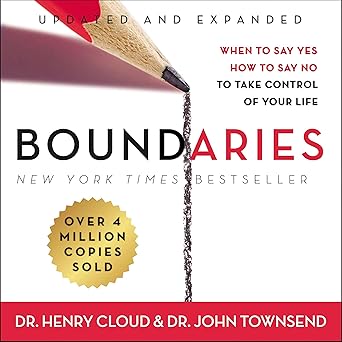
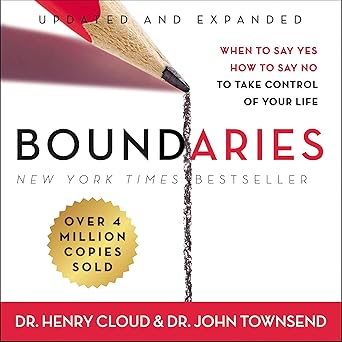
Click on Heading to see book on Amazon
Based on the book by Dr. Henry Cloud & Dr. John Townsend
Key Aspects of Boundaries
Definition: They are rules that regulate behavior, protecting personal well-being by defining what is acceptable and what is not.
Function: Boundaries help individuals manage their interactions, safeguarding time, energy, and mental health.
Before I read this book, I heard Chuck Swindoll preach a sermon about boundaries. He used a river as an example: within its banks, it brings life and health through its life-giving waters. But during storms, when it overflows its boundaries, it can bring chaos, suffering, destruction, and even death.
The bible is full of verses about boundaries, particularly Spiritual boundaries.
Spiritual Boundary Verses (KJV)
1 Peter 1:16 — God calls His people to be holy, establishing a boundary between His ways and the world’s ways.
1Pe 1:16 Because it is written, Be ye holy; for I am holy. 1Pe 1:17 And if ye call on the Father, who without respect of persons judgeth according to every man's work, pass the time of your sojourning here in fear:
James 4:7 — Shows the boundary of submission to God and resistance to the enemy—two sides of spiritual protection.
Jas 4:7 Submit yourselves therefore to God. Resist the devil, and he will flee from you. Jas 4:8 Draw nigh to God, and he will draw nigh to you. Cleanse your hands, ye sinners; and purify your hearts, ye double minded.
Psalm 101:3 — A commitment not to set wicked things before one’s eyes, a powerful boundary for purity and spiritual focus.
Psa 101:3 I will set no wicked thing before mine eyes: I hate the work of them that turn aside; it shall not cleave to me.
I had several people encourage me to read this book by Henry Cloud on Boundaries. It was a long book and took me several weeks, but I would encourage everyone to read this book. I truly wish I had read this book before I had children.
Page 1 — What the Book Is About & Why It Matters Spiritually
Boundaries is a Christian‑centered guide to understanding where your responsibility ends and another person’s begins. Cloud and Townsend argue that many believers struggle not because they lack compassion, but because they lack healthy, God‑honoring limits. The book teaches that boundaries are not walls of selfishness but structures that protect love, responsibility, and spiritual growth.
The authors root their teaching in the idea that God Himself sets boundaries. Creation is ordered by boundaries (light/dark, land/sea), and God gives humans the ability to say yes and no—a moral boundary that reflects His image. This frames boundaries not as psychological tricks but as a biblical pattern for healthy relationships.
Three core truths shape the book:
You are responsible for your own feelings, choices, and actions
You are not responsible for controlling or rescuing others
Love requires freedom, not coercion
Cloud and Townsend emphasize that many Christians confuse “loving” with “never disappointing anyone.” This leads to burnout, resentment, and spiritual exhaustion. Boundaries restore the ability to love others without losing yourself.
A key biblical anchor is Proverbs 4:23 —
Pro 4:23 Keep thy heart with all diligence; for out of it are the issues of life.
Guarding your heart is not selfish; it is stewardship. Healthy boundaries protect the life God has placed within you.
Page 2 — Major Themes of the Book
1. Ownership & Responsibility
Cloud and Townsend use the metaphor of a property line: your “yard” is your life—your emotions, values, talents, and choices. You are accountable for what happens inside your yard. Others are accountable for theirs.
This aligns with Galatians 6:3-5 —
Gal 6:3 For if a man think himself to be something, when he is nothing, he deceiveth himself.
Gal 6:4 But let every man prove his own work, and then shall he have rejoicing in himself alone, and not in another.
Gal 6:5 For every man shall bear his own burden.
A “burden” is a daily responsibility. When we carry someone else’s load, we rob them of growth and overextend ourselves.
2. The Power of Saying “No”
Many Christians fear that saying “no” is unloving. But Cloud and Townsend argue that a boundaryless “yes” is often dishonest, resentful, or fear‑driven. True love requires freedom.
Jesus Himself said “no” often—He withdrew from crowds, refused certain requests, and set limits on His time and energy. His boundaries were not barriers to love; they were expressions of purpose.
Matthew 5:37 teaches: Yes be Yes No be No.
Mat 5:37 But let your communication be, Yea, yea; Nay, nay: for whatsoever is more than these cometh of evil.
A boundary makes your yes meaningful and your no truthful.
Pray for courage to say no when God has not assigned you a task. A Spirit‑led “no” is often more loving than a guilt‑driven “yes.”
3. Boundaries in Relationships
Cloud and Townsend explore boundaries in friendships, marriage, parenting, work, and church life. The central idea: love thrives in clarity, not confusion.
In marriage, boundaries prevent enabling and promote mutual respect.
In parenting, boundaries teach responsibility and prepare children for adulthood.
In church life, boundaries prevent burnout and allow believers to serve joyfully.
The authors emphasize that boundaries are not punishments. They are invitations to healthier patterns. When someone violates a boundary, the consequence is not revenge—it is clarity.
When a child is a baby, it needs everything taken care of by its mother. But as the child grows, they naturally expand their boundaries and move beyond looking to their mother for everything. If a child is not allowed to grow in these areas, they become unable to deal with life. Growing up is natural, and unless boundaries are expanded, the child grows up with mother issues.
If a child is not taught to be responsible for their actions, you will find 40-year-old children still living at home and never being accountable. In allowing this, the parent has enabled bad behavior and hurt both the child and themselves. God has specific commandments, rules, and boundaries, and we cannot change the fact that what we sow we will reap. A person can fight against God, but that is a losing battle.
Page 3 — Applying Boundaries in Daily Christian Life
1. Emotional Boundaries
You are not responsible for managing other people’s emotions. You are responsible for managing your own. Cloud and Townsend teach that emotional boundaries protect your heart from manipulation, guilt, and unhealthy expectations.
Practice pausing before reacting. Ask: “Is this mine to carry?”
2. Boundaries with Difficult People
The book identifies several types of boundary‑challenging individuals:
The controller
The manipulator
The victim
The irresponsible
The overly dependent
Cloud and Townsend teach that boundaries are not about changing these people but about changing your responses to them.
Use clear statements:
“I’m not able to do that.”
“That doesn’t work for me.”
“I can help with this part, but not all of it.”
Boundaries are not confrontational—they are clarifying.
3. Boundaries and Spiritual Growth
Ultimately, boundaries help believers grow into maturity. They create space for prayer, reflection, obedience, and healing. They free us from people‑pleasing and allow us to live for God’s approval alone.
Ephesians 4:14 - 16 — “Speaking the truth in love, we will grow…”
Eph 4:14 That we henceforth be no more children, tossed to and fro, and carried about with every wind of doctrine, by the sleight of men, and cunning craftiness, whereby they lie in wait to deceive;
Eph 4:15 But speaking the truth in love, may grow up into him in all things, which is the head, even Christ:
Eph 4:16 From whom the whole body fitly joined together and compacted by that which every joint supplieth, according to the effectual working in the measure of every part, maketh increase of the body unto the edifying of itself in love.
Boundaries are truth‑telling in love. They are tools for spiritual growth.
Remember that we all face difficult decisions daily. We are bombarded with advertising which is basically legalized lying trying to convince us we cannot live without what they are selling. (New cars, boats, cell phones, clothes, vacations, etc.) It requires us to look for help through the Holy Spirit to learn to say no to temptations and walk in a new mindset which is the mind of Christ.
Rom 12:1 I beseech you therefore, brethren, by the mercies of God, that ye present your bodies a living sacrifice, holy, acceptable unto God, which is your reasonable service.
Rom 12:2 And be not conformed to this world: but be ye transformed by the renewing of your mind, that ye may prove what is that good, and acceptable, and perfect, will of God.
Conclusion —
You cannot live well without boundaries.
Boundaries protect your heart, clarify your calling, and strengthen your relationships. They help you live freely, responsibly, and joyfully in Christ.
When we set proper spiritual boundaries, it gives us more peace and helps others to respond to their own issues and grow spiritually. When we have the mind of Christ, things of the world will be minimized, and we can seek to do the very will of God like Christ did in his earthly ministry.
Contact
davidparham@lifecanbesimple.net
Follow
Connect with Us
+1 940-730-5105